
Applied Knowledge, Court-Related Artisans and State Formation process in the Bronze and Iron Ages Southern Levant: A Computational and Experimental Archaeology Approach

A MAPATS (Breakthrough Research Program, ISF) funded project
See, the Lord has called by name Bezalel… he has filled him with divine spirit, with skill, intelligence, and knowledge in every kind of craft (Exodus 35:31–33).
The research presented here aims to reveal the nexus of applied knowledge and political power in ancient Near Eastern societies using cutting-edge image processing technologies, experimental and computational archaeology. Craft, knowledge and technology were always a resource in the hands of elite. Control over its transmission was an intangible asset upon which early states kingdoms were founded and based. While archaeology is able to see large scale magazines meant for holding spoils of war, gifts and taxes, we have yet to find a way of directly observing applied knowledge and how it was obtained. The newly funded research will fill this lacuna by developing a novel yet robust avenue to identify aspects of applied knowledge embedded in proxies.
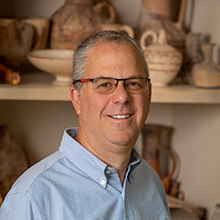 Heading the project is Prof. Yuval Gadot from the Department of Archaeology and Ancient Near Eastern Cultures at Tel Aviv University. Yuval is currently the Head of the Chaim Rosenberg School of Jewish Studies and Archaeology. He is codirecting the excavations at the Giv’ati Parking Lot, Jerusalem, and has published extensively on the history and archaeology of Jerusalem and its environs.
At the heart of the study are five tracks that study artifacts and architectural elements that were produced by artisans of the highest rank, that worked for the royal palaces of Canaan, Israel and Judah:
a) Stone masons who produced decorated stone capitals and orthostats
Included in this study are ashlar and orthostats found at Hazor, Megiddo, Samaria, and Ramat Rahel and volute capitals located today in museums, exhibitions and the storage facilities of the IAA. Starting at the bottom, we aim at a detailed reconstruction of the chain of actions applied for the manufacturing of orthostats, ashlars and volute capitals. We will then examine levels of standardization within the assemblages found at each site and between the different sites. Finally, we will compare levels of standardization between sites in Judah, Israel and, if possible, other regions of the Near East to recognize continuity, discontinuity and applied knowledge transfer across time.
b) Producers of alphabetic inscriptions on various mediums
The present project will fill the lacuna left by scribal-centered histories of the alphabet by offering robust data about how ancient stone, clay and if possible, metal workers created objects with alphabetic inscriptions. Starting with evaluating the process of early inscriptions incised into clay containers and continuing with the production of official engraved stone inscription, the proposed project will enable the research team to examine the entire process of production of these objects and the techniques and tools used by these early users of the alphabet. We can then identify workshops, similar crafts and writing practices, and the communities of specialists using the alphabet, who made inscriptions.
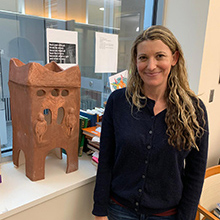 This study is performed in collaboration with Prof. Alice Mandell, the William Foxwell Albright Chair of Biblical and Ancient Near Eastern Studies and a member of the Jewish Studies program at John Hopkins University. Alice focuses on ancient Levantine scripts, written languages, and texts, spanning the second and first millennia BCE. She has published extensively on the scribal practices in the Canaanite Amarna Letters and several ongoing projects that examine alphabet-based literacy practices in the ancient Levant. Alice also studies and publishes on the history of the alphabet and the evidence for ancient literacy practices. Her “craft-literacy” approach specifically explores the evidence for the literacy practices of craft specialists and peoples involved in crafted, inscribed objects.
c) Producers of royal seals
The study will focus on Iron Age seals made of hard stones. The production of seals in the Southern Levant has recently been explored with a focus on second-millennium BCE scarabs made of steatite which is soft and easily worked steatite. The study of hard-stone seals from Iron Age Judah concerns different materials, crafts, and socio-cultural settings. Consequently, reconstructing the manufacturing process requires a different approach. Comparable analytical approaches, employing microscopy and surface analysis, have proved effective in identifying tool marks and manufacturing traces on ancient Near Eastern artifacts and will be further advanced in our study as we.
 The study will be conducted in collaboration with Prof. Ido Koch of the Department of Archaeology and Ancient Near Eastern Cultures at Tel Aviv University. Ido specializes in archaeology of the Southern Levant, particularly during the second and first millennia BCE, the archaeology of colonialism and migrations in antiquity, and the archaeological study of visual language, craft, and stamp seals. Ido is currently the co-PI of the ‘Stamp Seals from the Southern Levant’ project, among other things he does.
d) Producers of sophisticated rock-cut water tunnels
A maze of rock-cut tunnels and channels surrounds the spring of Gihon, Jerusalem's main water source during the Bronze and Iron Ages. These tunnels and channels represent ca. 2000 years of attempts to reach, divert and hoard Jerusalem’s most precious resource: running water that gushes out of the ground with fierce power and substantial capacity. Their execution demanded complex logistics and funds. Scholars have documented chisel and other tool marks left on the rock surface in an attempt to reconstruct the way the work was conducted. A typology of cut-marks, left by bronze and iron chisels was developed for relative dating. However, these observations were made by the naked eye and remain as an untested hypotheses. We plan an experiment that will reproduce and scan bronze and iron chisel marks in order to compare them with the original marks preserved on the wall of the tunnels and channels in Jerusalem. We plan to study applied knowledge invested in the cutting of the channels and tunnels. We will also study and compare cut marks from waterworks next to other springs located around Jerusalem, aiming at recognizing the spread of water technology and applied knowledge spatially. Finally, we will systematically compare Jerusalem’s waterworks with those of other cities (Gezer, Megiddo) and develop a chronologically based typology of waterworks.
e) ‘Architects’ applying mathematical knowledge expressed in measurements
Architectural planning and design and its execution are dependent, among other things, on the existence of metrology and a measurement system which, in turn, is dependent on the development of applied mathematics, geometry and agronomics. In this track We plan to revisit palatial sites in order to acquire high resolution orthophoto documentation of the architecture. In cases where the buildings are not accessible, we will correlate arial photos and other forms of documentation to improve accuracy. These will serve as a base for reevaluation of how the natural settings were appropriated and designed to allow construction and architectural manifestations. We will then study the layout of construction and inspect if and which metrological system was applied for construction and as a possible ground to characterize either a wider pattern or multiple local physical and thematical toolsets.
 The study will be conducted in collaboration with Prof. Roy Kozlovsky of the School of Architecture at Tel-Aviv University. Roy specializes in the history of architecture. His academic research interests include postwar architectural environments built for children, comparative architectural historiography, coastal landscape infrastructure, the techno-politics of crosstown expressways, and the landscape history of soil conservation.

Each track will begin by performing an experiment designed to examine possible ‘chains of action’ and validate our ability to identify the ‘signature’ of specific workshops.
The team leading and advising the experiments include:
Zohar Gotesman
 Zohar Gotesman is a sculptor based in Tel Aviv, Israel. Zohar is a graduate of the Bezalel Academy of Art and Design in Jerusalem. Between 2011–12 Zohar spent a year in Carrara, Italy, where he studied traditional marble carving. He is also graduated from the Archeology department of Ben-Gurion university. Zohar’s work is shown in prominent institutions, with solo shows at The Israel Museum, The Tel Aviv Museum of Art, and Rosenfeld Gallery in Tel Aviv. Zohar will design and take and active part in preforming the archaeological experiment. Together with his students from Bezalel, Shenkar and the School of Visual Theatre, replicas of decorated stone capitals as well as chiseled inscriptions will be produced.
Ms. Sharon Zuhovitzky
 Sharon Zuhovitzky is a PhD candidate in archaeology, with a background in computer science and extensive experience as a potter. She completed an MA in archaeology at Tel Aviv University in which she examined the mystery of Chalcolithic era Cornets and offered how they were produced, used and discarded.
Sharon will lead the experimental lab, helping to design and carry out the various experiments. She will also lead the study of inscriptions incised into clay vessels.
MUZA – Eretz Israel Museum
 MUZA, Eretz Israel Museum, Tel Aviv is a multi-disciplinary museum focusing on the local material culture of the region, past and present. MUZA's collections of traditional craft tools provides an excellent context for connecting experimental archaeology with material culture, while making current archaeological research accessible to broader public audiences. All planed experiments will be conducted in collaboration with the curator of The Man and His Work Pavilion which tells the story of local material culture, and describes, displays and preserves a vanishing world of handicrafts and work which were part of the way of life practiced in our region for generations. Collaborations will also include Ms. Yelena Elgart-Sharon, the archaeology curator.
All reproduced and authentic artifacts will be scanned to acquire a 3D point clouds that will serve as the foundation for the analysis. This will be performed by a newly established Computational laboratory. Thus, allowing us to infer the sequence of manufacturing actions, recognize individual artisan concealed “signatures,” and explore evidence of shared learning traditions within the crafting community.
Leading and advising team includes:
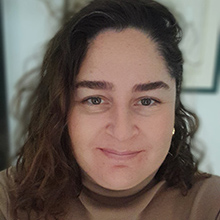 Dr. Ortal Harush
Ortal Harush is an archaeologist specializing in the Bronze and Iron Ages of the southern Levant. She completed her PhD at the Institute of Archaeology, Hebrew University of Jerusalem (2021), where she examined variability in ceramic vessels using advanced shape analysis to uncover both collective and individual production patterns. Her research integrates fieldwork with cutting-edge analytical tools to better understand ancient societies through their material culture. Since 2026 Ortal is a Dan David fellow at Tel Aviv University. Ortal will lead the computational lab where both the replicas produced and the ancient artifacts, will be scanned and studied.
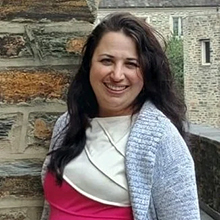 Dr. Shira Faigenbaum–Golovin
Shira Faigenbaum–Golovin is an applied mathematician who studies low and high-dimensional data (from surfaces to manifolds), and mathematical modeling. She strives to explore new challenges that arise from high-dimensional data as well as study the story that the data geometry tells by modeling the data and posing new mathematical tools. Shira is a Senior lecturer at the department of Mathematics, Bar-Ilan University. Notable application of Shira’s study is her contribution to the advance of computerized paleography. Shira will serve as the AI and machine learning consultant on this project as she will bring both mathematical expertise and prior experience in computational archaeology.
‘Applied Knowledge, Court-Related Artisans and State Formation process in the Bronze and Iron Ages Southern Levant: A Computational and Experimental Archaeology Approach’ is directed at establishing a new procedure for recording and examining archaeological artifacts, adding an entirely new dimension to the field. It will open the door for many similar studies of applied knowledge as an asset of palaces and temples worldwide. For Near Eastern archaeology it will open the door for an understanding of core aspects of Southern Levantine palace and temple culture in the Bronze and Iron Ages: knowledge as a source of power and control. It may even reveal hidden events of exchange between ruling elites.